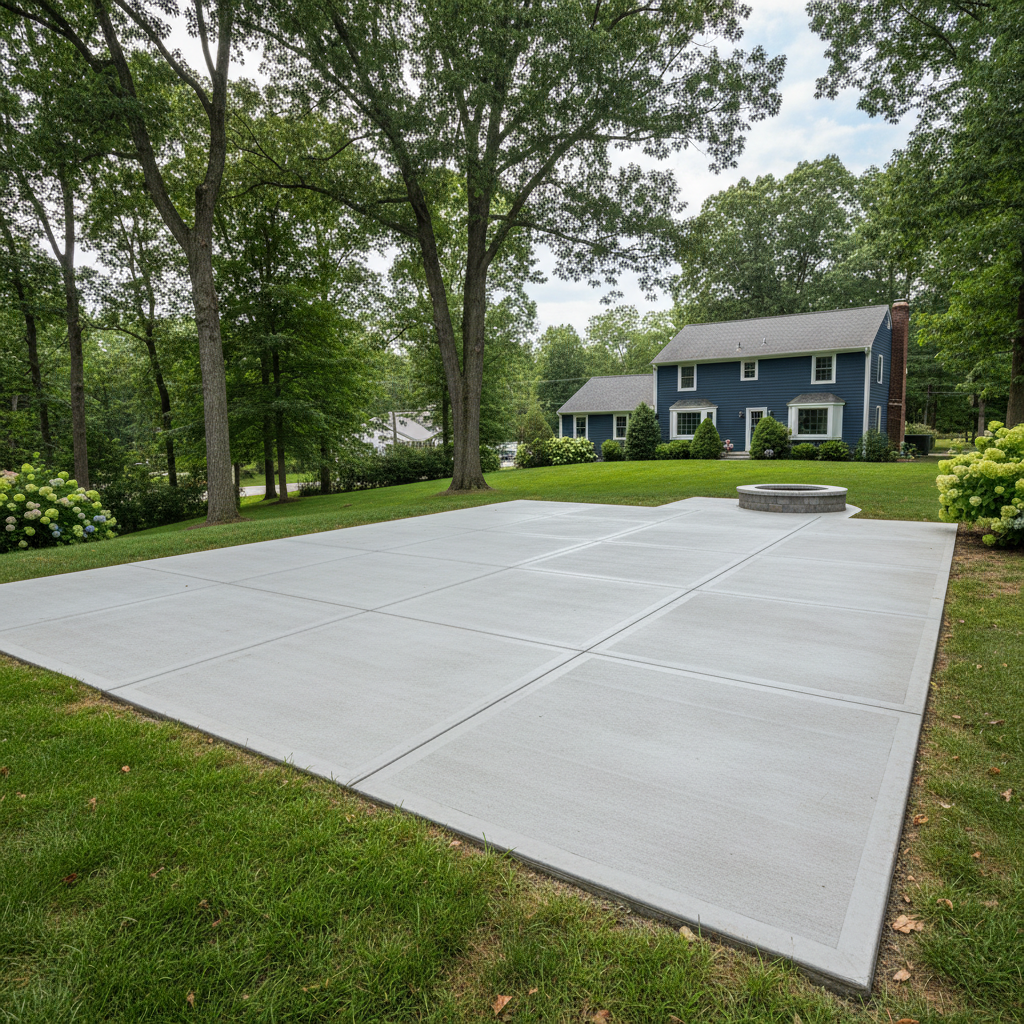
You've got a great concrete patio, maybe we even poured it for you at Synergy Concrete East Haven. Now, you want to make sure it lasts. That's smart. A well-maintained concrete patio isn't just about looks; it's about getting your money's worth and avoiding bigger headaches down the road. Our climate here in East Haven, with those brutal winters and humid summers, really puts concrete to the test. So, let's talk about how to keep your patio looking good and performing solid for years.
Extending Your Patio's Lifespan: The Big Picture
The biggest thing you can do to extend the life of your concrete patio is to protect it from water and freeze-thaw cycles. That's our number one enemy around here. Water gets into tiny pores, freezes, expands, and then thaws, slowly chipping away at the concrete. It's relentless.
- Seal It Up: This is non-negotiable. I tell every homeowner in East Haven to seal their concrete every 2-3 years. A good quality penetrating sealer will repel water, oil, and other stains. It's like putting a raincoat on your patio. Don't skip this, especially if you're in an area prone to standing water or heavy snow, like some of the lower-lying properties closer to the sound.
- Proper Drainage: When we pour a patio, we always make sure it has a slight slope away from your house. But sometimes, over time, landscaping changes or settling can create areas where water pools. Address these spots immediately. If water sits on your patio for days after a rain, you've got a problem that'll shorten its life.
- Heavy Loads: Concrete is tough, but it has its limits. Don't drive vehicles onto your patio unless it was specifically designed and reinforced for that kind of weight. Moving heavy planters or furniture? Lift them, don't drag them, to avoid scratches and gouges.
Regular Maintenance: Keeping Things Tidy
This isn't rocket science, but consistency makes a huge difference.
- Sweep Regularly: Get rid of leaves, dirt, and debris. Organic matter can hold moisture against the concrete, encouraging mold and mildew, and making it slick. Plus, gritty dirt acts like sandpaper if it's walked on.
- Clean Spills Immediately: Oil, grease, pet waste, spilled drinks – these can all stain concrete, especially if it's unsealed or the sealer is old. Blot them up, don't rub, and then clean the area with a mild detergent and water.
- Pressure Wash (Carefully): A light pressure wash once a year can do wonders for cleaning off accumulated grime. Use a wide-angle nozzle (like a 25-degree or 40-degree tip) and keep the wand moving. Don't get too close or use too high a pressure, or you can actually damage the concrete surface or strip the sealer right off. You're trying to clean, not etch.
- Winter Care: This is crucial for us. Avoid using rock salt or de-icers that contain ammonium nitrates or sulfates. These chemicals are terrible for concrete and can cause spalling (flaking or pitting). Use sand for traction, or de-icers specifically labeled as concrete-safe. Shovel snow promptly to prevent prolonged moisture exposure and ice buildup.
Warning Signs: What to Look For
Your patio will usually tell you when something's wrong. You just need to know how to listen.
- Cracks: Small hairline cracks, especially along control joints, are often normal. But if you see cracks that are wider than a credit card, or if they're growing quickly, or if they're lifting one section higher than another, that's a red flag. These could indicate sub-base issues or significant settling.
- Spalling or Pitting: This is when the surface of the concrete starts to flake off or develop small holes. It's usually a sign of freeze-thaw damage, often exacerbated by poor sealing or improper de-icer use.
- Discoloration or Stains: Beyond simple dirt, persistent dark spots, green patches (algae/moss), or rust stains can indicate moisture problems, poor drainage, or a failing sealer.
- Uneven Surfaces: If one section of your patio has sunk or lifted noticeably, it's not just a tripping hazard; it's a sign of a problem with the ground underneath. This could be due to soil erosion, poor compaction during installation, or tree roots.
When to Call a Professional
Look, some things you can DIY, but others really need an expert. Don't try to tackle major structural issues yourself; you could make it worse or even hurt yourself.
- Major Cracks or Settling: If you've got those wide, growing, or uneven cracks, or if a section of your patio has significantly sunk, call us. We can assess if it's a simple repair, needs mudjacking (also called concrete leveling), or if the section needs to be replaced. Trying to patch a structural crack usually doesn't fix the underlying problem.
- Extensive Spalling: If your patio surface is flaking off in large areas, it might be beyond a simple reseal. We can evaluate if resurfacing is an option or if a replacement is necessary to restore its integrity and appearance.
- Drainage Issues: If you've tried to improve drainage yourself and water is still pooling, or if you suspect water is undermining the patio's base, a professional can identify the source of the problem and recommend proper solutions, whether it's regrading, adding a drain, or something else. We've seen plenty of patios in the Foxon area struggle with drainage due to the clay soil, so it's a common issue we deal with.
- You're Unsure: Honestly, if you're looking at something and you're just not sure if it's a big deal or not, give us a call at Synergy Concrete East Haven. It's always better to get a professional opinion early on than to wait until a small problem turns into a really expensive one. We're happy to take a look and give you an honest assessment.
Taking care of your concrete patio isn't a huge chore, but it does require some attention. Do these things, and you'll enjoy your outdoor space for many, many years to come.