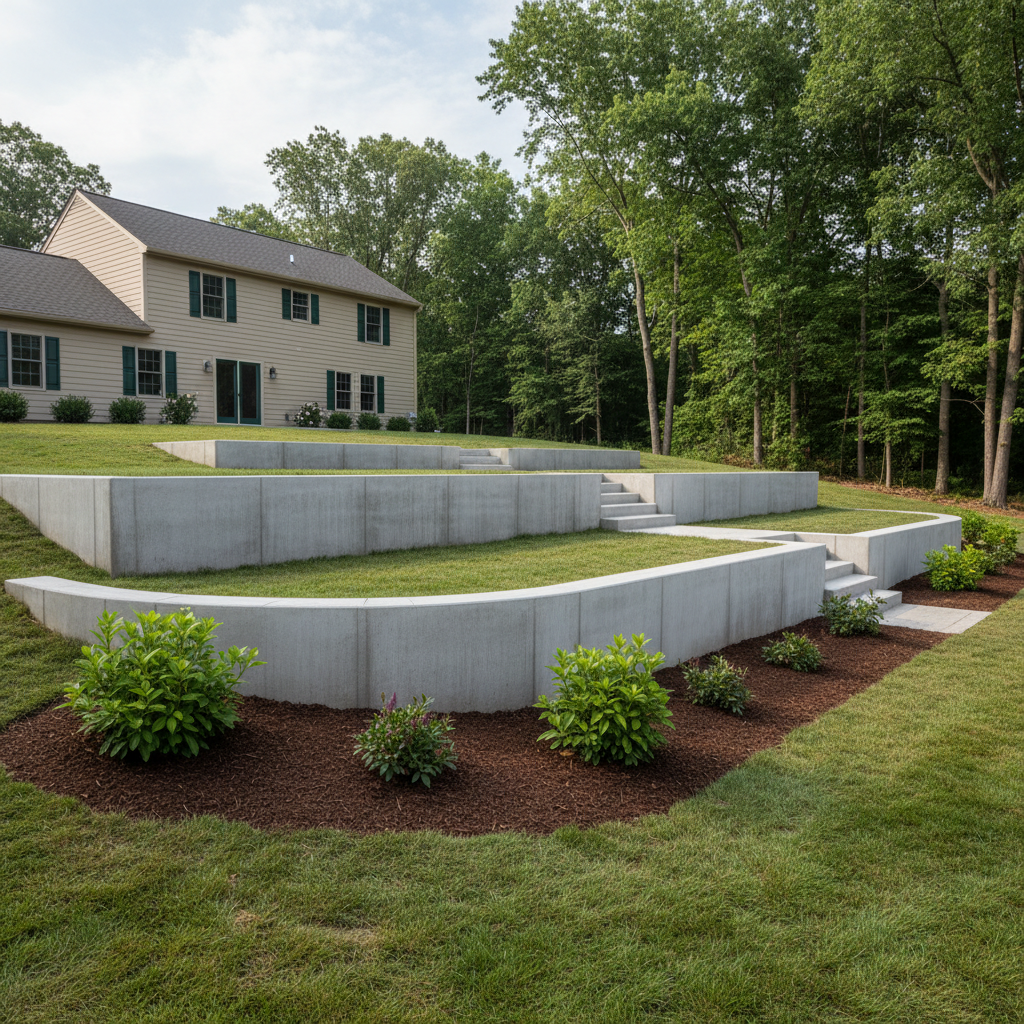
So, you're thinking about putting in a concrete retaining wall. Maybe you've got a sloped yard, or you're looking to create some usable, level space. Good idea. A well-built concrete retaining wall isn't just about holding back dirt; it's a serious investment that adds value and function to your property. But before you jump in, you need a plan. Here's what I tell folks in East Haven when they're getting ready for a project like this.
Your Project Timeline: Don't Rush It
Let's be real, you can't just snap your fingers and have a retaining wall appear. This isn't a weekend DIY job, especially if it's over a few feet tall or holding back significant earth. The timeline depends on a few things: the size and complexity of the wall, permitting, and the contractor's schedule.
- Initial Consultation & Design (2-4 weeks): First, you'll meet with a contractor. We'll look at your property, discuss what you want, and talk about drainage, soil conditions, and any potential challenges. For example, some areas in East Haven, especially closer to the shoreline or in older neighborhoods like Momauguin, can have tricky soil or drainage issues that need extra consideration. We'll draw up some plans, maybe get an engineer involved if it's a big wall.
- Permitting (4-8 weeks, or more): This is often the longest part. Any retaining wall over a certain height (usually 3 or 4 feet, check with the East Haven Building Department) will require a permit. This means submitting plans, possibly getting them reviewed by town engineers, and waiting for approval. Don't skip this step; it'll bite you later.
- Material Ordering (1-3 weeks): Once permits are in hand, we order the concrete, rebar, drainage materials, and anything else needed. Lead times can vary.
- Construction (1-4 weeks): This is where the magic happens. Digging, laying the foundation, rebar, pouring concrete, curing time, backfilling. A smaller, straightforward wall might be a week, but a larger, more complex one could easily be a month.
From start to finish, you're often looking at 2 to 4 months, sometimes more, especially if you hit peak construction season. Plan ahead, seriously.
What to Expect During the Process
When we're actually on site, here's a general rundown of what you'll see:
- Site Prep: We'll mark out the area, clear any vegetation, and start excavating the trench for the footing. It's going to get messy before it gets better.
- Footing & Rebar: The foundation of your wall is crucial. We'll pour a concrete footing, often with rebar reinforcement. This is what distributes the wall's weight and keeps it stable.
- Wall Construction: Depending on the type of concrete wall (poured-in-place, segmental block with concrete infill, etc.), we'll build the wall itself. This involves setting forms for poured concrete, placing more rebar, and then pouring the concrete.
- Drainage: This is huge. Water pressure behind a retaining wall is its biggest enemy. We'll install a drainage system, usually a perforated pipe behind the wall, covered with gravel, to direct water away. Don't let anyone build a retaining wall without proper drainage.
- Curing & Backfilling: Concrete needs time to cure and gain strength. Then, we'll backfill the area behind the wall, compacting the soil in layers.
- Cleanup: We'll clean up the site, remove debris, and leave your property looking good.
Expect noise, dust, and equipment. We do our best to minimize disruption, but it's a construction site for a while.
How to Prepare Your Property
You can help make the process smoother:
- Clear the Area: Move anything valuable or fragile away from the work zone. Patio furniture, grills, potted plants – get them out of the way.
- Mark Utilities: Call 811 before any digging starts. It's the law, and it prevents serious accidents. We'll do this too, but it's good for you to be aware.
- Access: Make sure we have clear access for equipment and material deliveries. If we need to get a mini-excavator into your backyard, think about the path it'll take.
- Talk to Neighbors: If the wall is close to a property line, or if our work might impact their access or noise levels, a heads-up from you can go a long way in keeping everyone happy.
- Pet & Child Safety: Keep kids and pets away from the construction zone. It's an active work site with heavy machinery and open trenches.
Questions to Ask Before You Sign a Contract
This is where you protect yourself and ensure you're getting a quality job. Don't be shy about asking these: