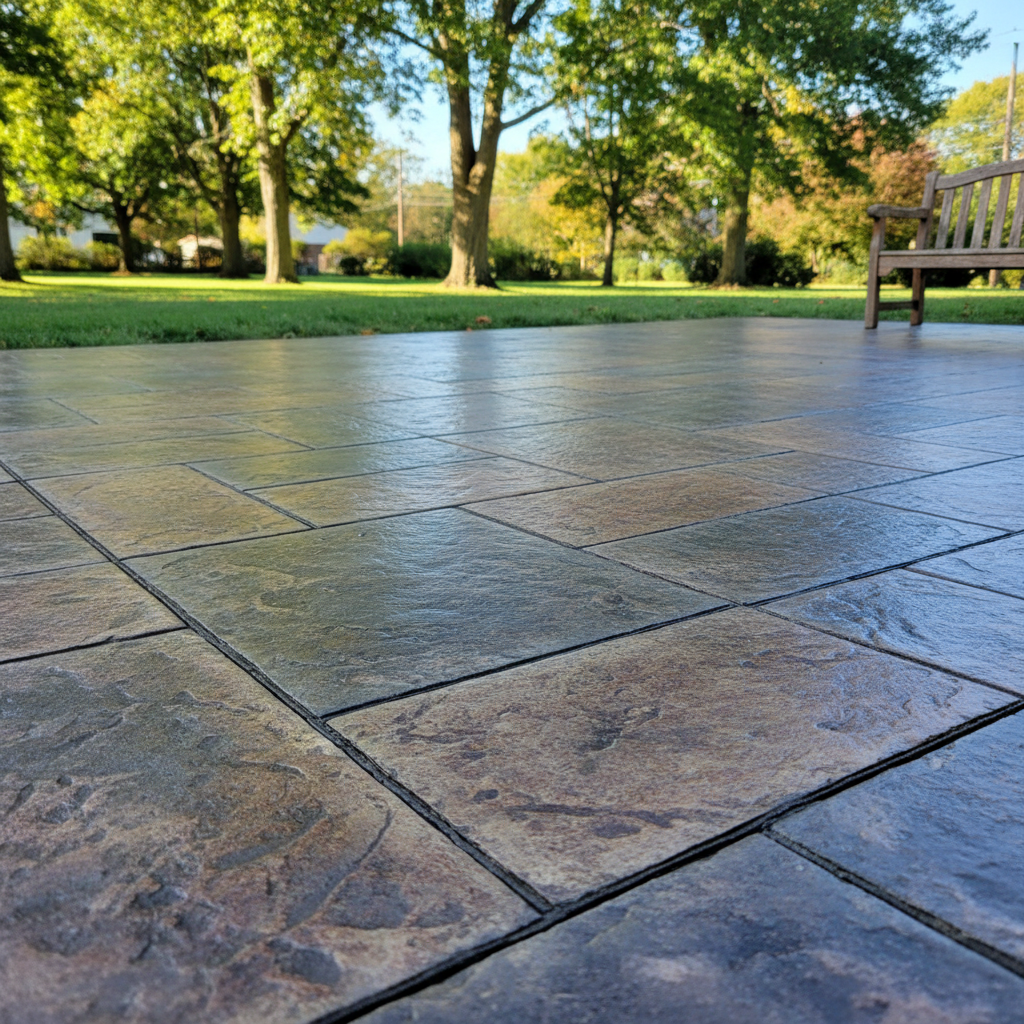
Got questions about stamped concrete? Good, because I get a lot of them from homeowners around East Haven. It's a popular choice for patios, walkways, and even driveways, and for good reason. But there's also a lot of misinformation out there. So, I figured I'd tackle some of the most common questions I hear. Let's get right into it.
What exactly is stamped concrete, anyway?
Alright, so stamped concrete, at its core, is just regular concrete that gets a special treatment. While it's still wet and pliable, we press flexible mats, which are basically giant textured molds, onto the surface. These mats have patterns that mimic natural materials like brick, cobblestone, slate, wood, or even flagstone. Before we stamp, we usually add a color hardener to the surface, and often a release agent that also adds a secondary, antiquing color. This whole process gives you the look of those more expensive materials, but with the durability and cost-effectiveness of concrete. It’s not just a surface coating; it's literally shaping and coloring the top layer of the concrete itself.
How long does stamped concrete really last here in Connecticut?
This is a big one, especially with our New England weather. If it's installed right – and that's a huge 'if' – stamped concrete can last a very long time, easily 20 to 30 years, sometimes more. The key is proper installation: good sub-base preparation, the right concrete mix, correct curing, and then, importantly, sealing. Here in East Haven, we deal with pretty harsh freeze-thaw cycles. That means water gets into microscopic pores, freezes, expands, and can cause spalling or cracking over time if the concrete isn't properly sealed and maintained. A good quality sealer applied correctly and reapplied every few years is your best defense against our winters and the salt we often use on surfaces.
Is stamped concrete slippery when it's wet or icy?
That's a fair concern, especially if you're thinking about a pool deck or a busy walkway. The short answer is, it can be, but it doesn't have to be. The slipperiness really depends on the texture of the stamp pattern and the type of sealer used. Some patterns, like a very smooth slate, might be slicker than a heavily textured cobblestone. When we apply the final sealer, we can add an anti-slip additive, which is usually a fine grit, right into the sealer. It's almost invisible once it dries, but it gives the surface a bit more grip. For areas like porches or steps that get a lot of winter use, I always recommend it. Synergy Concrete East Haven makes sure to discuss these options with you upfront.
Can you really match any stone or brick look with stamped concrete?
You'd be surprised how good it looks. We can get incredibly close to matching the appearance of natural stone, brick, or even wood. There are tons of different stamp patterns out there – from large ashlar slate patterns to intricate European fan brick. Then you've got the color options. We use base colors mixed into the concrete or applied as a color hardener, and then accent colors (release agents) that get washed off partially, leaving a subtle antiquing effect. This layering of color is what really brings out the depth and realism. While it won't be exactly the same as natural stone, most people can't tell the difference unless they're looking really, really closely. It's definitely a convincing imitation.
What about cracking? Concrete always cracks, right?
You're not wrong; concrete does tend to crack. It's just the nature of the material, especially as it cures and settles. But here's the thing: we manage those cracks. The goal isn't to prevent all cracks, but to control where they happen. We do this by installing what are called control joints or expansion joints. These are deliberate cuts or grooves in the concrete that create weak points, encouraging any cracking to occur along those lines, keeping them out of sight and maintaining the integrity of the slab. A good installer knows exactly where to place these joints based on the size and shape of your project. If you see a crack, and it's running along a control joint, that means it's doing its job.
Is stamped concrete more expensive than regular concrete?
Generally, yes, it is. You're paying for the extra materials – the color hardeners, release agents, and sealers – and for the specialized labor involved in the stamping process. It takes more skill and time to properly stamp and color concrete than it does to just pour and finish a plain slab. However, when you compare it to the cost of installing natural stone, pavers, or brick, stamped concrete almost always comes out as the more affordable option. You get that high-end look without the high-end price tag of the actual natural materials. It's a great value proposition for getting a custom, beautiful surface that will last.
Does stamped concrete require a lot of maintenance?
It's not high-maintenance, but it's not no-maintenance either. The biggest thing you need to do is keep it clean and reseal it periodically. For cleaning, a good sweep and a hose-down usually do the trick. For tougher spots, a mild detergent and a brush work well. You definitely want to avoid harsh chemicals or pressure washing that's too intense, as that can damage the sealer or even the concrete surface. The most important maintenance step is resealing. For most residential applications in our climate, I tell folks to plan on resealing every 2-3 years. This protects the color, prevents staining, and guards against those freeze-thaw cycles we talked about. It's a pretty straightforward process, and it makes a huge difference in how long your stamped concrete looks great.